

Prototype vs. First Article Manufacturing
Prototypes test a design. First articles prepare it for production.
Prototypes and first articles can look very similar—even when both involve manufacturing only one part. The difference is what happens next in the manufacturing process.
A prototype is typically made to test or refine a design and may never enter production. A first article is produced as an early step in a planned path toward repeat manufacturing.
Prototype vs. first article:
What’s the difference?
Prototype
Often made in a quantity of one or very few
Used to explore, test or refine a design
May involve processes or methods that aren't intended for production
May never move into repeat manufacturing
First article
Also begins with a quantity of one or very few
Produced with repeat manufacturing in mind
Involves evaluating the part as well as the intended manufacturing approach
Precedes a planned production run
Production intent matters more than quantity.
Both a prototype and a first article can be produced in a quantity of one. The major differentiator is the intended path for the part.
That path isn't always known at the outset. A prototype may be used to determine whether a design is viable before a decision about production is even made. But when future production is a possibility, considering manufacturability early can help preserve a clearer path forward if the project moves ahead.
A one-off part or very small run with no expectation of future production is approached differently from a first article, which is intended to lead into repeat manufacturing.
When repeat production is the goal, programming, setup, tooling, fixturing and machining strategy can all be considered with future runs in mind.
Why repeat production changes the manufacturing approach.
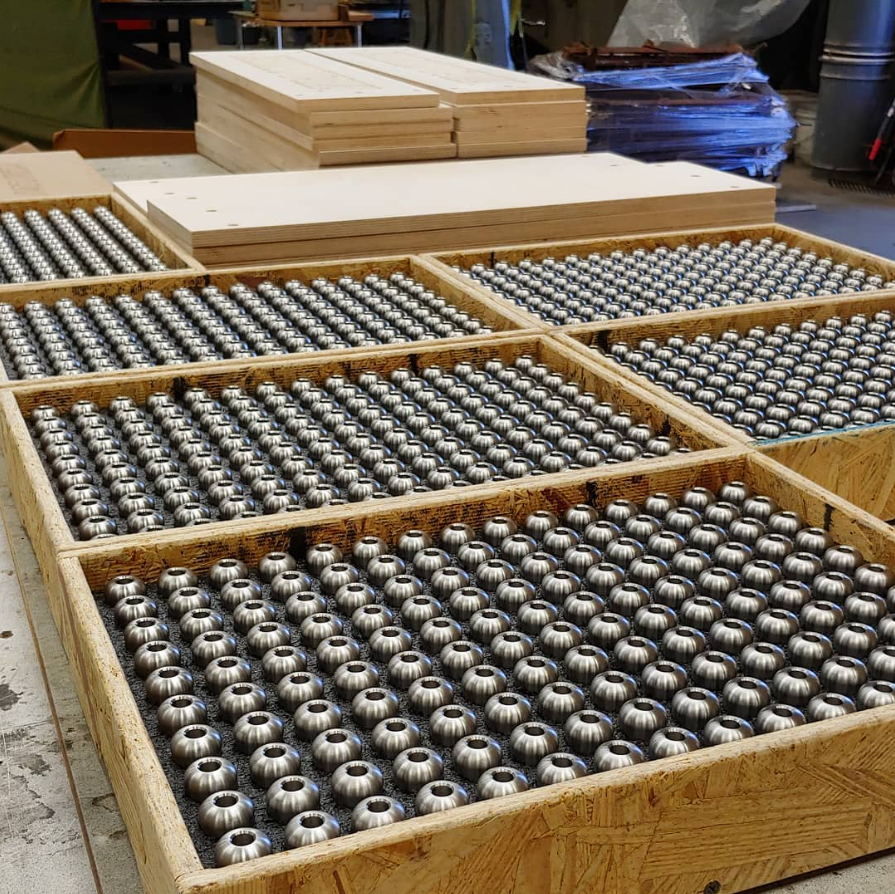
When something’s intended for repeat production, manufacturing decisions can be made with more than the first successful part in mind.
Programming, setup, tooling, fixturing and machining strategy can all be considered in relation to future production runs.
The goal is to establish a process that can be repeated efficiently and consistently, rather than solving only for the first part.
How production volume affects cost.

The cost of manufacturing something includes more than the time it spends on a machine.
Programming, setup, tooling and fixturing can represent a significant portion of the initial investment required to produce a part. When only one or a handful of parts are needed, those costs are distributed across a very small quantity.
With repeat production, the initial investment can be spread across a larger production run; efficiencies developed in the manufacturing process can also further reduce the cost per part.
How first articles fit into our process.

First articles are one part of a broader path toward repeat production.
Depending on where a project is starting, we may support design for manufacturing (DFM) and production preparation before manufacturing first articles. Alternately, we can work with an established design that is ready to move into production.
Once we’ve evaluated the part and manufacturing approach, we’ll use what we’ve learned to map out an efficient process for repeat production.
-
A prototype is a part or product made to test, evaluate or refine a design. Prototypes are usually produced in very small quantities and may never move into repeat production.
-
A first article is the first part or small group of parts manufactured as part of a planned path toward repeat production. A first article allows the part and manufacturing approach to be evaluated before moving forward with a larger production run.
-
The main difference is production intent. A prototype is typically used to test or refine a design; a first article is made with repeat manufacturing in mind.
-
Yes. A first article can be a single part. What makes is different from a one-off prototype isn’t necessarily quantity, but rather the intention to use what is learned from that part to prepare for repeat production.
-
Manufacturing costs include programming, setup, tooling and fixturing in addition to machining time and materials. With repeat production, some initial costs can be distributed across a larger number of parts, which can reduce the cost per part.
-
Yes, Tektonics may support prototype or very-low-volume work when it is part of a broader product development or manufacturing path. Our manufacturing model is primarily focused on first articles and repeat production, where we can develop processes with future production runs in mind.
Frequently Asked Questions
Are you looking for a prototype—or preparing for production?
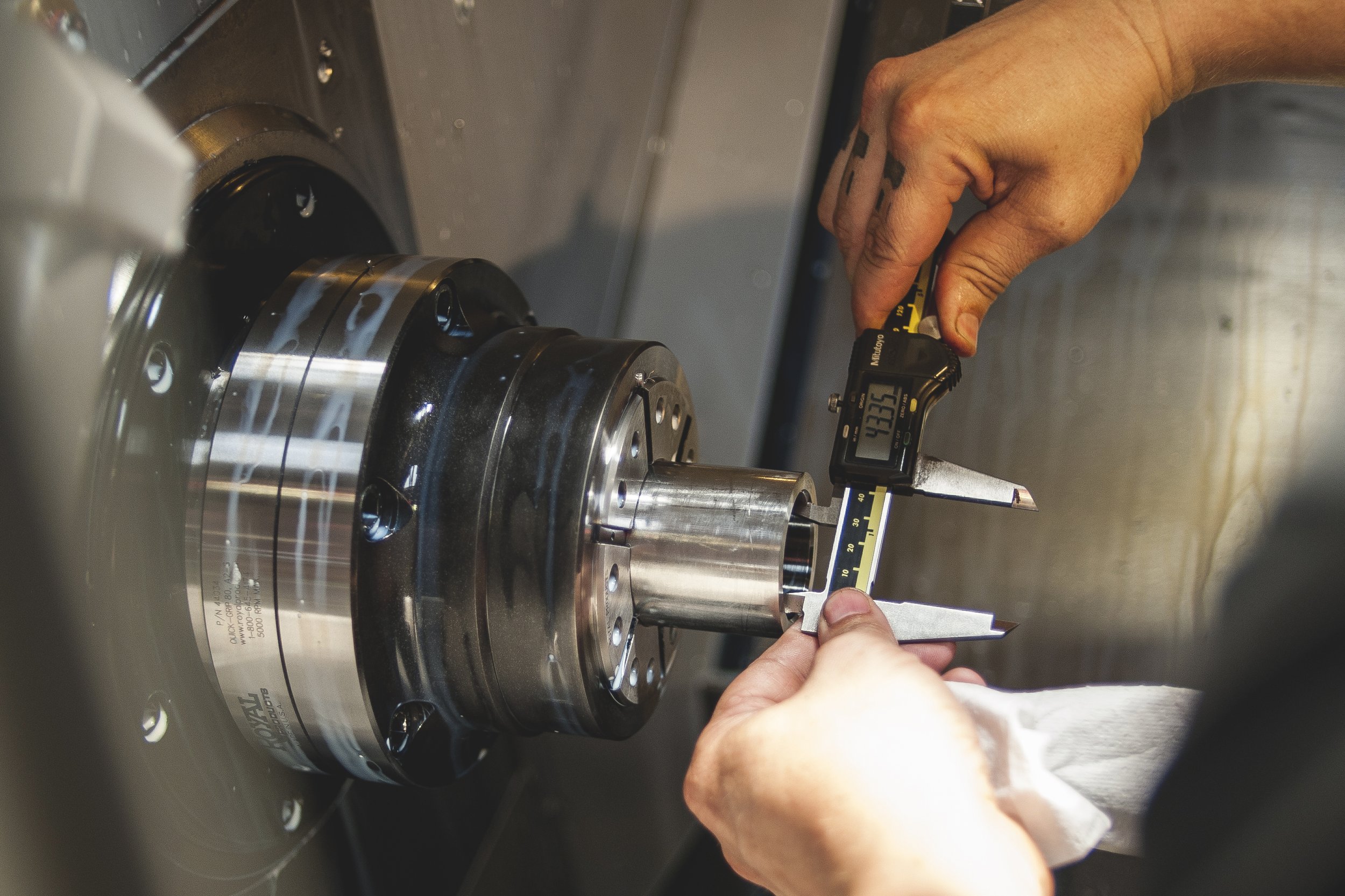
If you're developing a part or product that may ultimately move into repeat production, you don't need to know whether to call the first part a prototype or a first article.
Tell us where you are in the process, your anticipated production volumes (if known) and what you're trying to accomplish. We can help determine the right manufacturing approach.